Understanding Sound Insulation Paint: Enhancing Acoustic Comfort at Home
Sound insulation paint explained: what it improves, its limitations, and how it differs from true soundproofing in homes and apartments.
THERMAL IMAGING & PREVENTION
1/22/20264 min read
What is Sound Insulation Paint?
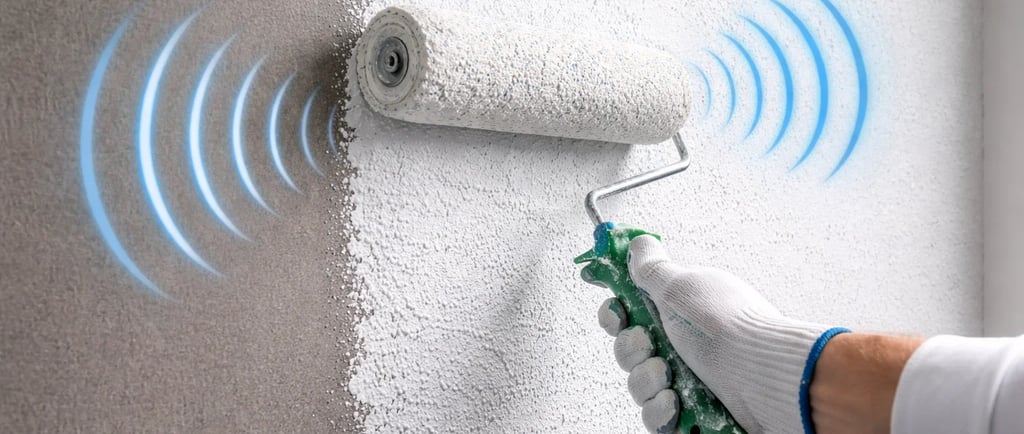
Sound insulation paint is a specialized coating designed to enhance the acoustic properties of interior spaces.
Unlike conventional paint, this formulation incorporates sound-absorbing materials that act as a barrier to minimize sound transmission. The primary objective is to create a more peaceful environment by reducing noise from both external sources and internal activities, thereby improving overall comfort in residential settings.
Typically composed of a blend of polymers, additives, and unique sound-dampening compounds, sound insulation paint serves as an effective alternative to traditional soundproofing methods. The materials used—such as expanded glass beads, mineral fillers, and other sound-absorbing agents—work together to provide a thicker layer that absorbs sound waves rather than reflecting them. This property is what differentiates sound insulation paint from regular wall coatings.
The application of sound insulation paint is relatively straightforward, making it an appealing choice for homeowners seeking a quick solution to noise disturbances.
It can be applied directly to walls and ceilings, and due to its versatile nature, it is suitable for a range of surfaces, including drywall, concrete, and wood. Once dry, the paint not only contributes to the aesthetic appeal of a room but also effectively diminishes echo and background noise. Moreover, the paint can be tinted to match any color scheme, making it a practical choice for enhancing sound insulation without compromising on design.
In residential settings, particularly in urban environments where external noise can be intrusive, sound insulation paint provides a cost-effective measure to improve privacy and acoustic comfort. Incorporating sound insulation paint into your home improvement plans can create a quieter, more serene atmosphere that fosters relaxation and productivity.
The Difference Between Acoustic Comfort and Soundproofing
Acoustic comfort and soundproofing are often used interchangeably in discussions about noise reduction, yet they convey distinct concepts.
Acoustic comfort refers to the overall quality of sound in an environment, which includes how sound travels and interacts with the space. It takes into consideration not only the loudness of noise but also the clarity and character of sounds within a given area. In essence, it aims for a pleasant auditory experience, minimizing disruptive noises while allowing desirable sounds to be heard clearly.
Conversely, soundproofing involves methods and materials designed to completely block or reduce the transmission of sound from one area to another. This might be achieved through heavy barriers, specialized windows, or significant construction modifications, ultimately aiming at creating a barrier that prevents sound escape or intrusion.
Sound insulation paint serves as a remarkable tool in the realm of acoustic comfort. This innovative product can reduce sound intensity by absorbing sound waves, which in turn enhances the overall experience of sound within a room.
For instance, sound insulation paint can significantly diminish the noise from outside traffic in a residential setting, thereby improving the comfort for occupants. Moreover, in areas such as home theaters or music studios where sound clarity is paramount, this type of paint can contribute positively by curtailing external disturbances.
However, it is important to recognize the limitations of sound insulation paint in achieving total soundproofing. While it can effectively reduce noise levels, it is unlikely to eliminate them completely, especially in high-impact situations like heavy machinery operation or loud construction work nearby.
Sound insulation paint functions best as part of a broader strategy for acoustic treatment, rather than as a standalone solution for complete soundproofing. Thus, the objective of achieving acoustic comfort is fundamentally different from the quest for soundproofing, marking an essential distinction for homeowners and professionals alike.
Setting Realistic Expectations for Homeowners
When considering the application of sound insulation paint, homeowners should approach the prospect with realistic expectations.
While sound insulation paint can significantly reduce noise levels, its effectiveness is influenced by several factors. Primarily, the size of the room plays a crucial role; larger spaces may require more layers of paint or additional soundproofing methods to achieve noticeable improvements. In smaller rooms, sound insulation paint may provide sufficient noise reduction, particularly for airborne sounds such as voices or music.
The type of noise is another critical factor to consider. Low-frequency sounds, such as those from heavy machinery or bass frequencies of music, can be particularly challenging for sound insulation paint to mitigate. These sounds often require more robust soundproofing solutions, such as acoustic panels or insulation within walls.
Conversely, sound insulation paint can effectively reduce high-frequency noise, including voices and higher-pitched sounds, making it a suitable option for residential environments.
The application process itself also affects the overall performance of the paint. Proper surface preparation, application techniques, and adherence to the manufacturer's guidelines are essential to maximize the noise reduction benefits.
Homeowners should ensure the surface is clean, dry, and free from imperfections before applying the paint. Additionally, applying multiple coats may enhance the paint's acoustic properties, boosting its effectiveness.
Combining sound insulation paint with other soundproofing methods can yield optimal results. For instance, using acoustic curtains, rugs, and sealing gaps around windows and doors can complement the paint's noise-reducing capabilities. By understanding these factors and considering a multi-faceted approach, homeowners can enhance acoustic comfort in their living spaces.
Advantages and Disadvantages of Using Sound Insulation Paint
Sound insulation paint has gained popularity as an innovative method for improving acoustic comfort in residential spaces. Some of the notable advantages of using this type of paint include ease of application.
Unlike traditional soundproofing materials, sound insulation paint can be easily applied with a roller or brush, making it a convenient solution for homeowners looking to enhance their environments without extensive renovations. The aesthetic benefits are another significant advantage; sound insulation paint is available in various colors and finishes, enabling homeowners to maintain or enhance the visual appeal of their spaces while simultaneously addressing sound issues.
In addition to these benefits, sound insulation paint also offers added thermal insulation properties. This can contribute to energy efficiency by reducing heating and cooling costs, which is an important factor for many homeowners. The multifunctional nature of sound insulation paint thus makes it an attractive option for those looking to improve both acoustic and thermal performance.
However, there are disadvantages to consider as well. One of the main drawbacks of sound insulation paint lies in its limitations regarding the types of noise it can effectively reduce.
While it may be useful for absorbing upper-frequency sounds, such as voices or higher-pitched noises, it may not be as effective for low-frequency sounds such as bass or heavy machinery. This limitation may lead homeowners to seek additional soundproofing measures for complete acoustic control.
Cost is another important consideration. While sound insulation paint can be less expensive than other soundproofing investments, some homeowners may find its cost prohibitive, especially when multiple coats are necessary for optimal effectiveness.
Carefully weighing the advantages and disadvantages of sound insulation paint is essential for homeowners looking to make informed decisions regarding their soundproofing options.
ConforX
Personalized interior painting and thermal imaging services in Valencia, Spain
Phone / WhatsApp
Interior Painting
Wall Surface Preparation & Minor Repairs
Thermal Imaging Inspections
© 2026. ConfortX . All rights reserved.
SERVICES
info@conforx.es
+34 692525330
QUICK LINKS
LEGAL