Thermal Insulating Paint vs Other Insulation Materials: A Comprehensive Comparison
Thermal insulating paint compared with XPS, EPS, foam, cork, aerogel and other materials. Learn differences in performance, thickness, and use cases.
1/22/20265 min read
Introduction to Thermal Insulating Paint and Its Role in Insulation
Thermal insulating paint is a specialty coating designed to improve the thermal performance of surfaces, such as walls and ceilings, by minimizing heat transfer.
Unlike traditional paints, which primarily serve aesthetic purposes, thermal insulating paint incorporates elements that increase thermal resistance and reduce energy consumption. Its primary function lies in enhancing the R-value, a measure of thermal resistance in insulation materials, and lowering thermal conductivity (λ). These characteristics are essential for improving energy efficiency and comfort within buildings.
The R-value indicates how well a material can resist heat flow, with higher values signifying better insulation performance. Conversely, thermal conductivity expresses how readily heat passes through a material; lower λ values denote superior insulative properties. By understanding these concepts, property owners can better assess thermal insulating paint as a potential solution for improving energy efficiency.
This discussion aims to compare thermal insulating paint with more conventional insulation materials, such as fiberglass, foam, and cellulose.
While thermal insulating paint can significantly enhance insulation properties, it is important to note that it should not be viewed as an all-encompassing replacement for traditional insulation solutions. Instead, it functions as a complementary option that can be applied to already insulated surfaces, further optimizing energy conservation. Through this comprehensive comparison, readers will be better equipped to make informed decisions regarding insulation types suited to their specific needs.
Comparing Thermal Performance
The evaluation of thermal performance in buildings plays a crucial role in energy efficiency, climate control, and overall comfort.
When comparing thermal insulating paint to traditional insulation materials, it is essential to analyze key thermal resistance qualities such as R-values and thermal conductivity values (λ). R-value measures the material's resistance to heat flow, while λ indicates the rate at which heat is transferred through the material.<\/p>
Thermal insulating paint typically offers an R-value ranging from 0.5 to 1.0 per coat, which is relatively lower when compared to several traditional materials.
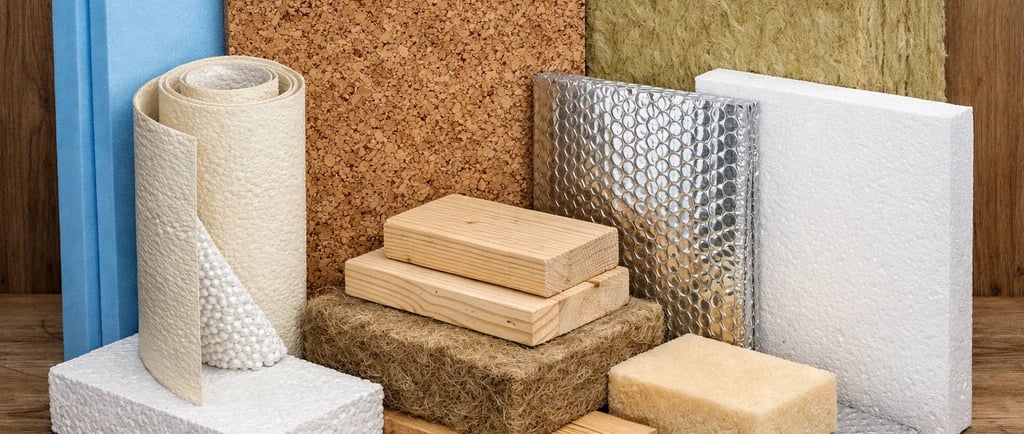
For example, extruded polystyrene (XPS) boasts an R-value around 5.0 to 6.5 per inch, while expanded polystyrene (EPS) provides an R-value of roughly 3.6 to 4.2 per inch.
Polyurethane (PU) foam insulation is known for its superior thermal resistance with R-values between 6.0 to 7.0 per inch. Other materials such as cork and rubber insulation present R-values of about 4.0 to 5.0 and 3.6 to 4.2 per inch, respectively.<\/p>
Mineral wool insulation can achieve R-values as high as 3.2 to 4.2 per inch, while insulating wallpaper offers about 1.0 to 1.5, placing it slightly higher than thermal insulating paint but lower than the more effective options.
Glass and plexiglass materials, although not traditionally viewed as insulation, present an interesting comparison, with R-values around 1.0 to 2.0 based on thickness and type.
Aerogel-based coatings, however, can reach astounding R-values of up to 10.0, showing promising characteristics in thermal performance.
Incorporating visual aids such as comparison charts can significantly enhance this analysis, allowing for a more straightforward understanding of how thermal insulating paint ranks against these traditional materials regarding thermal performance.
Such information is invaluable for homeowners and builders aiming to optimize energy efficiency in their spaces.
Installation Methods and Space Requirements for Insulating Paint vs Other Insulation Materials
When it comes to thermal insulating solutions, understanding the installation processes for various materials is crucial. Thermal insulating paint offers a notably different approach compared to traditional insulation materials such as fiberglass, foam board, or cellulose.
One of the defining characteristics of thermal insulating paint is its ease of application.
This type of paint can be sprayed or brushed onto surfaces, requiring only basic tools such as rollers, brushes, and spray equipment. In contrast, other insulation materials often require more extensive tools and techniques, including cutting and fitting materials to specific dimensions.
Safety considerations play a vital role in the installation of both methods. Thermal insulating paint is generally considered safer, as it involves fewer hazardous materials compared to traditional insulation options, which may off-gas or pose health risks during installation.
For example, fiberglass insulation requires protective gear to prevent skin irritation and respiratory issues. On the other hand, thermal insulating paint often demands just standard safety precautions, such as gloves and masks to mitigate paint fumes.
In terms of space requirements, thermal insulating paint excels in scenarios where limited space is a concern. Since it is applied directly to surfaces, it does not require the bulk associated with traditional insulation materials. These conventional options can occupy significant space, potentially reducing usable area in a room, which may be problematic in smaller environments.
Thermal insulating paint, being relatively thin, allows homeowners or businesses to maintain the integrity of their space while still achieving thermal efficiency.
Ultimately, the choice between thermal insulating paint and other insulation materials hinges on specific needs, preferences, and space availability. Each method has its advantages and understanding these can lead to better informed decisions in insulation strategies.
Cost Analysis and Typical Use Cases for Thermal Insulating Paint and Other Insulation Materials
When evaluating thermal insulating paint, it is pertinent to consider both the cost and practical applications in comparison to traditional insulation materials.
The cost of thermal insulating paint in Europe typically ranges from €8 to €20 per m² for the material alone, depending on the product and number of coats required.
Application costs vary based on surface condition, access, and preparation work, as thermal paints often require careful wall preparation and controlled application.
While the upfront cost is higher than standard interior paint, the investment may be justified in specific situations by improved thermal comfort and energy efficiency, particularly in renovations where traditional insulation is impractical.
Traditional insulation solutions such as mineral wool (glass wool), rigid foam boards (XPS/EPS), and spray polyurethane foam follow a different cost structure.
As a general reference, mineral wool insulation typically ranges from €5 to €15 per m² for materials, while rigid insulation boards usually cost €10 to €30 per m², depending on thickness and performance.
When installation complexity, required thickness, space loss, finishing work, and labor are taken into account, the total cost of traditional insulation systems can increase significantly.
In renovation scenarios where space, access, or structural constraints limit the use of conventional insulation, thermal insulating paints may offer a complementary solution rather than a direct replacement.
Thermal insulating paint presents an excellent solution for specific use cases such as retrofitting older homes, where conventional insulation might be difficult to install without extensive renovations. It is particularly beneficial for enhancing the thermal performance of walls, ceilings, and roofs, where a thin-layer insulation solution is advantageous.
This lightweight insulating option can effectively minimize heat loss in various environments, leading to cost savings in heating and cooling.
On the other hand, traditional insulation remains critical in new builds or for extensive insulating needs. In areas requiring thicker insulation for maximum thermal resistance—like basements or attics—traditional methods may offer superior performance.
Therefore, while thermal insulating paint can complement existing insulation, it cannot wholly replace conventional methods for all situations. Its best application lies in specific scenarios, letting homeowners enjoy both modern efficiency and retrofitting possibilities without attributing an overwhelming financial burden.
ConforX
Personalized interior painting and thermal imaging services in Valencia, Spain
Phone / WhatsApp
Interior Painting
Wall Surface Preparation & Minor Repairs
Thermal Imaging Inspections
© 2026. ConfortX . All rights reserved.
SERVICES
info@conforx.es
+34 692525330
QUICK LINKS
LEGAL